















A rubber dam, also called a dental dam, is a thin sheet that isolates the tooth being worked on. Your dentist uses it mainly to keep the tooth dry and clean. It also helps protect your mouth and airway from small tools, debris, and treatment liquids. That dry, clean field helps many fillings, root canals, and bonding repairs set properly. It may also help them last longer.
If the dam feels too tight, you have trouble swallowing, or you feel panicky, tell your dentist right away. Small adjustments or a quick pause can often help.
How It Works in Practice
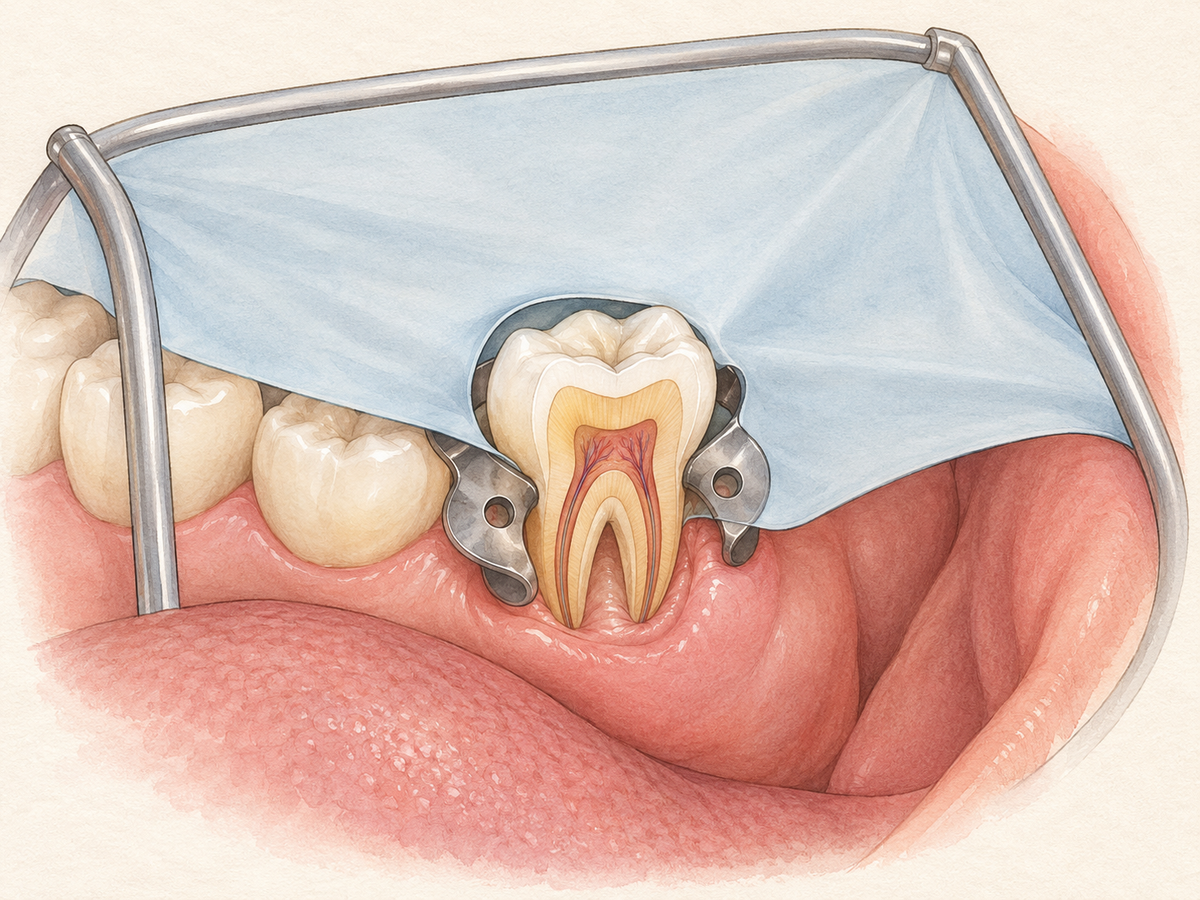
Think of the dam as a stretchy safety sheet. It is usually made from latex, a stretchy natural rubber. Latex-free versions are available for people with allergies or sensitivities. The sheet is stretched over a frame so it stays open. The dentist punches a small hole, or a few holes, and places them around the tooth or teeth being treated.
A small clamp, a tiny clip that grips the tooth, holds the sheet in place. Sometimes the dentist also uses floss or a small tie to keep it snug. Once the sheet is in place, the tooth is separated from your saliva, tongue, and cheek. That is called tooth isolation. The goal is a dry field: a moisture-free working surface for drilling, bonding, or filling.
The setup takes only a short time, but it makes the actual treatment easier to control. A clinical review describes the basic setup as a sheet in a frame, with a hole over the tooth and a clamp to hold it in place.
Why It Matters by Procedure
Different procedures use the dam for similar reasons, but the stakes can differ.
- Fillings. Tooth-colored filling material bonds best when the tooth is dry. Saliva can interfere with that bond.
- Root canal treatment. This is the procedure where the dam matters most. The inside of the tooth needs to stay clean, and the dam keeps saliva and bacteria out. It also helps protect your airway if small files or rinses are used. Clinical guidance describes the dam as the standard of care for root canal treatment whenever it can be placed.
- Dental bonding. Bonding material needs a moisture-free surface to stick well.
- Dental sealants. A protective coating on back teeth has to stay dry while it sets. A dam can help, but some dentists may use other moisture-control methods.
- Crown work. Some crown steps use a dam for a clean, dry area, but not every case needs one.
In each case, the dam supports a dry field and keeps saliva and debris from getting in the way.
The Real Benefits
The clearest benefit is safety. The dam helps keep small instruments, filling material, and liquid from slipping toward your throat. That lowers the risk of swallowing or breathing in something that doesn’t belong there. A dental guide on using the rubber dam says airway protection is one of the clearest reasons for it.
The dam also keeps saliva and bacteria away from the treatment site. That supports a cleaner repair. Some evidence suggests restorations placed with a rubber dam may last longer than those placed with cotton rolls alone, but the evidence is limited and mixed. A Cochrane review found some very low-quality evidence favoring rubber dam use for certain direct restorations, while noting that stronger studies are needed.
It can also reduce the spray and splatter from drilling. That makes the visit safer for you and the dental team.
The Drawbacks and Discomforts
It is normal to feel unsure about the dam. Common complaints include:
- Feeling closed in or confined.
- A tired or sore jaw from holding the mouth open.
- Trouble swallowing because the sheet and clamp feel awkward.
- A tight feeling from the clamp on the tooth or gum.
- Anxiety if you don’t know what to expect.
These feelings are usually temporary. If you feel panicky or need to swallow, tell your dentist. Pausing, adjusting the sheet, or taking a short break can help.
If you have a latex allergy or sensitivity, say so before treatment. Non-latex dental dam materials are available. Latex-free dental dam alternatives exist for patients who cannot use standard latex sheets. Clamp discomfort is also a known issue, especially in younger patients. A review of studies looked at ways to reduce pain and discomfort from clamp placement.
| Common concern | What you can do |
|---|---|
| Feel closed in | Ask for a pause signal and short breaks. |
| Tired jaw | Ask if a bite block or rest break is possible. |
| Trouble swallowing | Tell your dentist; they can pause or adjust the dam. |
| Latex allergy | Request a non-latex sheet before the appointment. |
When Your Dentist Might Skip It
A missing rubber dam does not mean your care is poor. Some procedures don’t need one. Routine exams and cleanings usually don’t involve a restoration, so there is nothing to isolate.
Some small fillings can be done with cotton rolls and suction instead. This may be more likely when the material is less moisture-sensitive or the tooth is easy to keep dry. One 30-month randomized trial in primary molars found no significant difference in filling survival between rubber dam and cotton roll isolation for a glass ionomer material, and concluded the dentist could safely choose based on the case.
Patient comfort and medical history also matter. Severe anxiety, trouble breathing through the nose, or certain health needs may lead the dentist to skip the dam or choose another method. In an emergency, speed and access may take priority.
The decision is a professional judgment call, not a shortcut. A dentist weighs the need for a dry field against your comfort and safety.
What to Expect and Ask
When the dam is in place, you may notice:
- The sheet against your cheek or lip.
- A tight feeling as the clamp grips the tooth.
- The suction sounding louder than usual.
- A crowded or busy feeling in your mouth.
You should still be able to breathe through your nose. If nose breathing is difficult, say so. Some people have more trouble with this, and your dentist can adjust. Breathing comfort during rubber dam use is a known concern, especially for people who struggle to breathe through the nose.
Before treatment, ask:
- “Can I use a non-latex dam?”
- “Can we agree on a hand signal if I need a break?”
- “What should I do if I need to swallow?”
- “Will the clamp feel tight on my gum or just my tooth?”
A clear explanation before treatment can reduce anxiety. A study of adults undergoing restorative treatment found that explaining the rubber dam beforehand helped reduce anxiety and improve acceptance.
Speaking up is not being difficult. It is part of making a shared decision with your dentist. If the dam feels uncomfortable, the dentist can often adjust it or give you a break.
This article has been reviewed by an oral health professional for accuracy. It is intended to provide general educational information and should not be used as a substitute for personalized medical advice, diagnosis, or treatment. If you have questions or concerns about your oral health, please consult a dentist, physician, or other qualified healthcare provider.