


















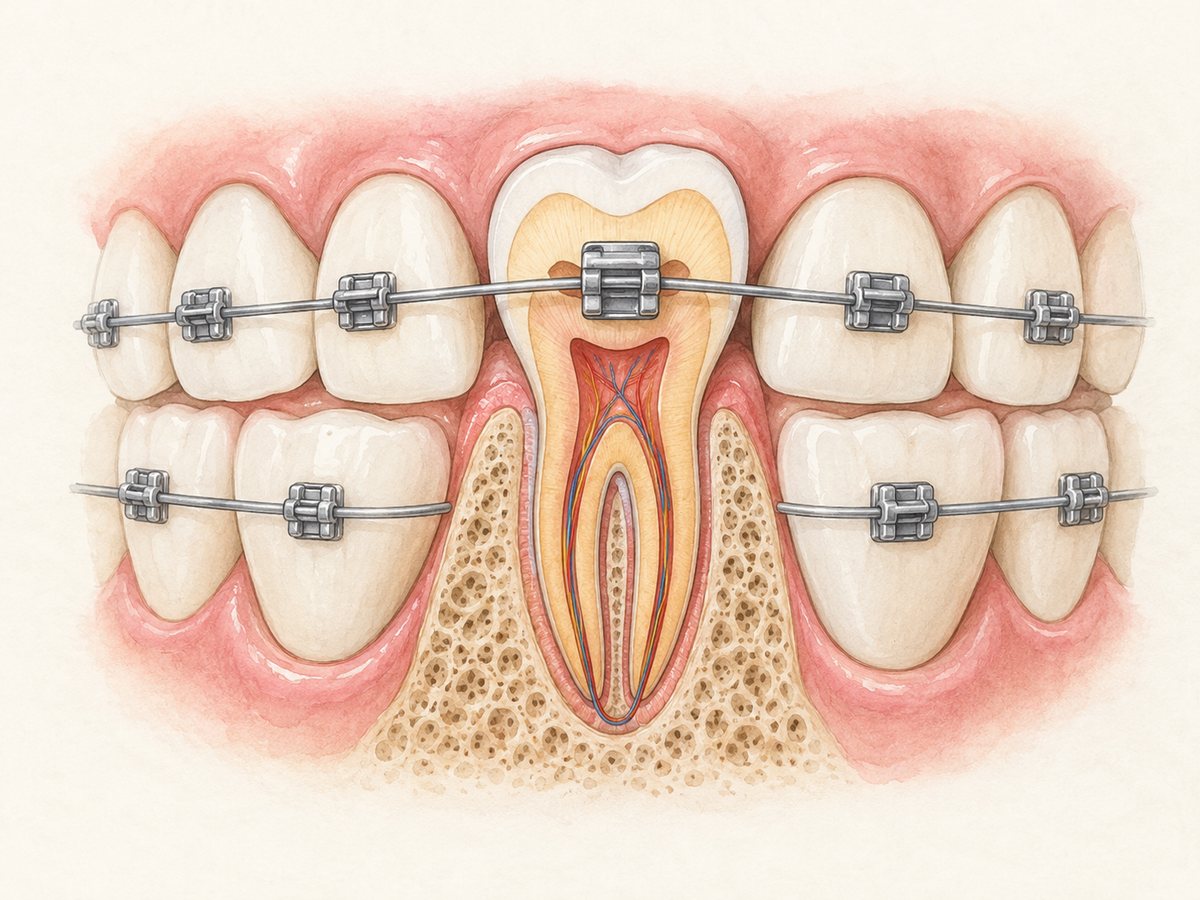
Adult braces can be made affordable if you compare at least two or three written quotes and use a supervised option. The main routes are dental school clinics, orthodontic insurance benefits, in-house payment plans, third-party financing, dental discount plans, and assistance programs. Avoid mail-order braces that skip x-rays and regular in-person checks; supervised care is the safest way to lower costs.
The lowest monthly payment does not mean the cheapest overall. Before you sign anything, ask what is included, who supervises your care, and what happens if treatment takes longer.
This article is general information, not advice for your specific mouth. Your dentist or orthodontist can help you choose what is safe for your teeth and gums.
Why Adult Braces Cost So Much
There is no single national price for adult braces. Your quote depends on four main things:
- How complex your bite problem is. More tooth movement, extractions, or jaw issues usually means more appointments.
- The type of braces hardware. Metal braces can cost less than ceramic braces or clear aligners.
- How long you wear braces. Longer treatment often means more visits and higher total cost.
- What orthodontists charge in your area. Fees vary by city and practice.
Because of this, one useful number from one region will not automatically apply to you. A European cost study found that cost per unit of improvement varied widely between practitioners and countries, from 21.70 euros to 116.62 euros. European cost study
Ask each office for an itemized written quote. Some parts, such as lab fees, may be fixed. Others, such as the payment schedule or a discount for paying in full, may be negotiable.
Option 1: Dental School Orthodontics
University dental schools with orthodontic residency clinics can offer treatment at a lower price than many private practices, often around 20 to 50 percent less. You will likely be treated by a resident, a dentist who is completing advanced specialty training in orthodontics. A licensed orthodontist supervises the care.
Research on graduate orthodontic clinics has found good results under this model. In one program, patients treated by residents showed an average bite-score improvement of about 78 to 81 percent over two time periods. Assessing Treatment Outcomes of a Graduate Orthodontic Program
Expect longer appointments and fewer locations. Look for a program that is CODA-accredited, which means it meets the official standards of the Commission on Dental Accreditation. When you call, ask:
- What is the total cost for my case?
- How long is the waiting list?
- Who supervises each visit?
- Are emergency visits included?
- What happens if my assigned resident graduates before I finish?
Option 2: Orthodontic Insurance Benefits
Some dental plans include adult orthodontic coverage, but not all do. Coverage often works as a percentage, such as 50 percent, up to a lifetime maximum. That means the plan will not pay more than a set amount over your lifetime. Some plans also list a separate orthodontic lifetime limit. Federal Employees Dental and Vision Insurance Program
Ask your plan for a predetermination, or pre-approval. This document says what the insurer will pay before you start treatment. Sandia Total Health program summary
Also confirm:
- Does the plan pay for braces, or only clear aligners?
- Are you limited to in-network orthodontists?
- What is the lifetime maximum for orthodontics?
- Are there waiting periods before coverage starts?
Dental waiting periods can matter. They may last several months and apply to expensive services. Switching plans may restart the clock. Analysis of California Assembly Bill 1048
Option 3: In-House Payment Plans
Many orthodontists offer their own monthly payment plan. You usually pay a down payment and spread the rest over a set number of months, often at 0 percent interest. Some plans do not require a credit check, but always ask the office directly. Bespoke payment plans to secure and grow your patient base
Before you commit, get the plan in writing. Ask:
- How much is the down payment?
- How many months do I pay?
- Is it really 0 percent interest, or are there fees?
- Is there a discount for paying in full?
- What are the late fees and missed-payment rules?
- Can the total price change if my treatment changes?
An in-house plan can be convenient, but it still needs to fit the total cost, not just the monthly amount.
Option 4: Third-Party Financing
Companies like CareCredit can spread the cost of treatment over a longer period. The main risk is interest. Many medical credit cards advertise a promotional period of 6 to 18 months. If you do not pay the balance in full by the end, deferred interest can be added, often at a high annual percentage rate. One study reported an average APR of about 27 percent for medical credit cards. Prevalence of Medical Credit Cards by Specialty
Before you apply:
- Get multiple treatment quotes first.
- Compare APR, fees, and the promotional period.
- Do not finance an overpriced treatment just because the monthly payment looks low.
Option 5: Dental Discount or Membership Plans
A dental discount plan is not insurance. You pay a yearly membership fee, and participating dentists or orthodontists agree to reduce certain fees by a set percentage, often 20 to 40 percent. You pay the provider directly at the discounted rate.
There is no reimbursement process, but there is also no insurance safety net. Before buying, ask:
- Does this plan include adult braces or clear aligners, not just cleanings and fillings?
- Which local orthodontists accept it?
- What exactly will I pay for my treatment?
- Are there annual maximums or extra fees?
Option 6: Assistance Programs and Community Clinics
If you have lower income, public programs may help.
- Medicaid: Adult orthodontic coverage varies by state. Some states cover adult braces only when there is a handicapping or medically necessary problem, and many programs focus on children. Call your state Medicaid office and ask about adult orthodontic coverage. Comparison of Orthodontic Medicaid Funding in the United States
- Community health centers: Many federally supported clinics use sliding-scale fees based on income. They may not offer braces on site, but can be a starting point. Dental Services: Information on Coverage, Payments, and Fee Variation
- Nonprofit grants and charity care: Ask local dental societies or clinics about grant programs, charity care, or payment assistance. Expect narrow eligibility rules and long waitlists.
How to Choose Between the Six Options
Use this table to compare the main routes.
| Option | Upfront cost | Monthly cost | Eligibility or wait | Supervision |
|---|---|---|---|---|
| Dental school | Low | Low | Waitlist possible | Licensed orthodontist supervises residents |
| Insurance | May have deductible | Lower if covered | Plan rules and waiting periods | In-network orthodontist or dentist |
| In-house plan | Down payment | Fixed monthly | Usually simple | Orthodontist |
| Third-party financing | Low | Monthly plus interest | Credit check | Orthodontist |
| Discount plan | Annual fee | Pay discounted balance | Plan network | Participating provider |
| Assistance programs | Low or zero | Low or zero | Income or medical need, long waits | Varies; confirm provider |
Match the option to your situation:
- Lowest total cost and can wait: dental school.
- Already have coverage: insurance predetermination.
- Prefer private office with predictable monthly budget: in-house plan.
- Can pay fairly quickly: 0 percent promotional financing if you can clear the balance.
- Lower income or medical need: Medicaid, community clinic, or nonprofit program.
Remember, the cheapest upfront option is not always cheapest overall. In graduate clinics, more broken appointments and resident transfers can lengthen treatment time. Factors Affecting Patient Treatment Duration in an Advanced Orthodontic Education Clinic Long treatment or retreatment can add real costs.
Red Flags and Questions to Ask
Watch for these warning signs:
- Mail-order or DIY braces with no in-person exam, x-rays, or regular monitoring. Professional dental and orthodontic societies have warned that remote treatment without proper diagnosis and monitoring can be hazardous. BOS joins European consensus: ‘DIY Orthodontics’ is hazardous for patients
- No licensed dentist or orthodontist supervising the treatment.
- Pressure to pay a large deposit before you see a written plan.
- A quote that is very low because it leaves out x-rays, retainers, or emergency visits.
Before you commit, ask:
- Who supervises my treatment, and what is their dental license?
- Will I have regular in-person visits and x-rays?
- What exactly is included in the written quote?
- What costs extra, such as broken brackets, missed visits, or retainers?
- What happens if my treatment takes longer than expected?
- If I finance, what is the APR and total cost after the promotional period?
- If I use a discount plan, which local orthodontist accepts it for adult braces?
Next Steps
Use this checklist to move from research to a real consultation:
- Get at least two or three written, itemized quotes.
- Ask for a treatment plan with estimated time and total cost.
- If you have dental insurance, request a predetermination.
- Call the nearest dental school orthodontic residency clinic to ask about cost and waitlist.
- Call your state Medicaid office and search for community health centers near you.
- Before financing, compare total cost, APR, and the payoff deadline.
- Book a consultation with a supervised provider.
Start with the lowest-barrier step: make one phone call to a dental school clinic, insurer, or community clinic. You can compare options while keeping your teeth and gums safe.
This article has been reviewed by an oral health professional for accuracy. It is intended to provide general educational information and should not be used as a substitute for personalized medical advice, diagnosis, or treatment. If you have questions or concerns about your oral health, please consult a dentist, physician, or other qualified healthcare provider.