














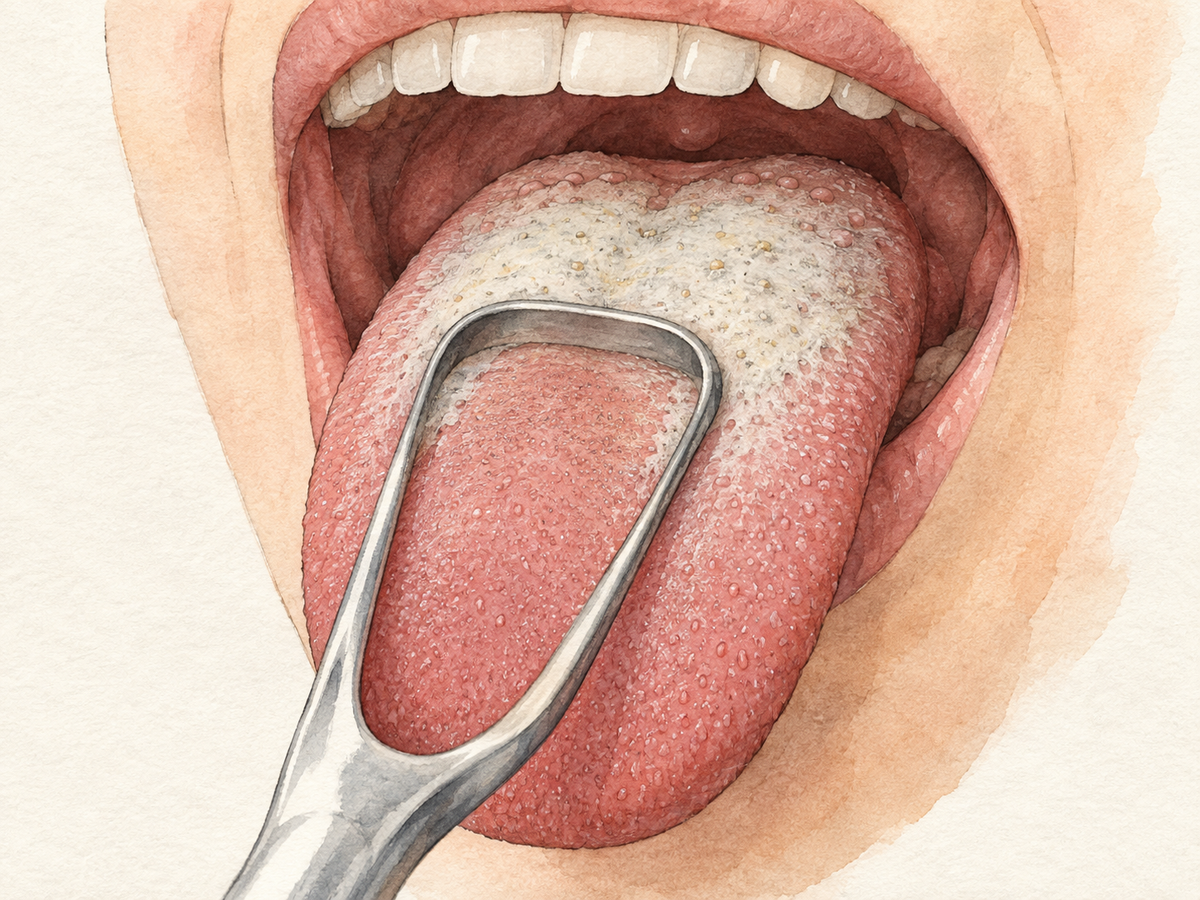
Clean the back of your tongue once or twice a day, not just the front. Use a tongue scraper or a soft toothbrush, pull gently from back to front, and rinse. This removes the tongue coating that produces odor. If your breath stays bad despite good daily care, see a dentist or doctor.
The goal is to lift the tongue coating away before the bacteria in it turn into sulfur odor gases.
Why Tongue Cleaning Helps Bad Breath
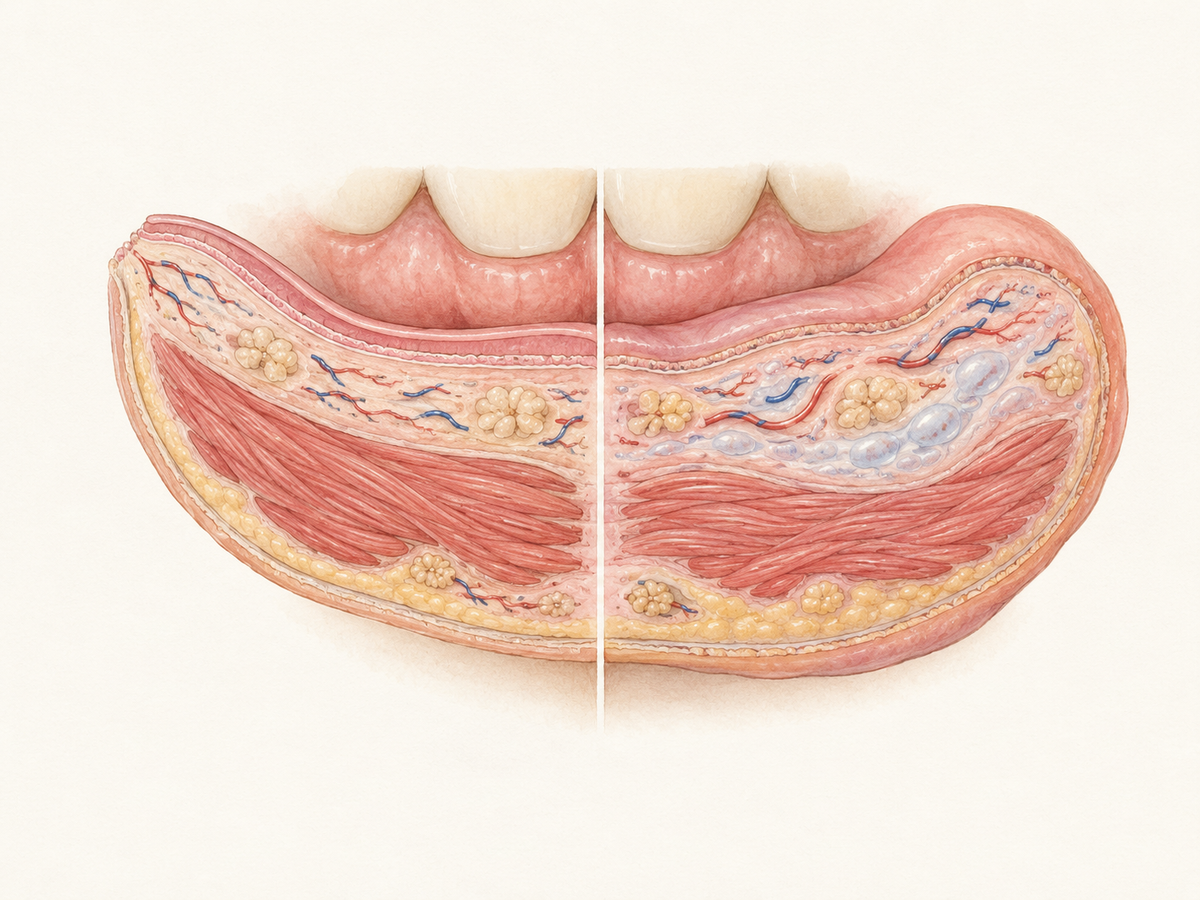
The back of your tongue is rough and covered with tiny crevices. It naturally collects dead cells, food debris, and bacteria. This layer is called tongue coating.
Bad-breath bacteria in that coating break down proteins and release volatile sulfur compounds—basically sulfur odor gases. These gases are what make breath smell unpleasant. Your tongue, especially the back of the tongue, is a common source. In one international consensus report, tongue coating was linked to roughly half of detected bad breath cases, according to halitosis management guidance. Another review found that most bad breath starts in the mouth, with coated tongue and gum disease among the top causes, according to a systematic review on halitosis.
Cleaning the tongue is not just a cosmetic trick. It removes the coating that feeds odor-causing bacteria. A review found that toothbrushing plus tongue cleaning reduced odor gases and tongue coating more than toothbrushing alone, according to a systematic review and meta-analysis.
Pick the Right Tool
You do not need to overthink this. Three common tools work:
| Tool | What it is | Good to know |
|---|---|---|
| Tongue scraper | A small plastic or metal loop or bar | A good first choice for most people |
| Soft toothbrush | The soft-bristled brush you already use | A useful backup if scraping makes you gag |
| Tongue brush | A small brush made just for the tongue | Works, but not clearly better than a scraper |
A stainless-steel or plastic tongue scraper is a reasonable first choice. In one small clinical trial, a tongue scraper reduced sulfur gases by 75 percent while a toothbrush reduced them by 45 percent, according to research on tongue-cleaning methods. A Cochrane review also found a small benefit for scrapers or cleaners over toothbrushes, though the evidence was weak and short-term.
If a scraper triggers a strong gag reflex, use a soft toothbrush instead. The most important part is not the exact tool. A 2022 study found that toothbrushes and scrapers can both reduce bad breath and coating when the tongue is cleaned accurately from back to front. Stay gentle and choose the tool you will actually use.
Technique: Back to Front, Gently
Follow these steps:
- Stick your tongue out.
- Place the scraper or brush as far back on your tongue as feels comfortable.
- Pull it forward with light, even pressure.
- Rinse the scraper or brush.
- Repeat 3 to 5 times.
- Lightly clean the sides of your tongue if comfortable, but do not scrub hard.
Stop before you reach the point that makes you gag. Gagging is a safety signal, not a challenge to push through. Scraping too far back can cause discomfort or injury.
This back-to-front motion is what matters most. One study concluded that wiping accurately from the rear of the tongue to the front was more important than which tool was used, according to mechanical tongue cleaning research.
How Often and How Hard
Clean your tongue once or twice a day. The easiest times are in the morning and before bed, ideally before brushing your teeth.
Use gentle pressure. If your tongue hurts or bleeds, you are pressing too hard. Painful cleaning is not more effective cleaning.
You do not need to worry that a normal tongue scraper will scrape off your taste buds. Proper tongue cleaning removes the coating, not the taste buds themselves. In fact, some research shows that taste can improve after tongue cleaning, especially with a scraper, according to a study on tongue cleansers and taste. Taste buds also renew themselves regularly.
Heavy scrubbing is the real problem. The tongue is soft tissue, and excessive force can damage its surface, according to safety research on tongue cleaning. A light touch is safer and more comfortable.
Mistakes That Keep Breath Bad
A few common habits can leave odor behind even when you are trying.
- Cleaning only the front of the tongue. Most bacteria and debris sit near the back. Cleaning the tip alone misses the main source.
- Using mouthwash instead of scraping. Mouthwash can help, but it does not physically lift off the coating. Mechanical removal matters. A clinical trial found that adding tongue cleaning to brushing reduced odor gases, while brushing alone did not significantly reduce them, according to oral hygiene regimen research.
- Skipping the back of the tongue. The back is where odor gases are mainly produced.
- Scraping a coated tongue without drinking enough water. Dry mouth can make the coating thicker and odor stronger. Staying hydrated supports saliva, which helps wash away debris.
These mistakes are common and easy to fix. The aim is not perfection. It is consistency with the right area and a light touch.
Make It a 60-Second Routine
You can turn tongue cleaning into a simple daily habit.
- Scrape your tongue 3 to 5 times, back to front.
- Brush your teeth for two minutes.
- Floss or clean between your teeth.
- Rinse with water or an alcohol-free mouthwash.
- Drink some water to stay hydrated.
Do this in the morning and again before bed. The exact order can vary, but combining mechanical cleaning steps works better than relying on one alone. In one study, tooth brushing plus mouthwash plus tongue cleaning was the most effective combination for reducing odor gases, according to clinical trial results.
Consistency beats intensity. A gentle routine that you do every day will help more than an aggressive scrub once in a while.
When Bad Breath Doesn’t Go Away
Tongue cleaning helps with tongue-related odor, but it is not a fix for every cause. See a dentist or doctor if you have:
- Bad breath that continues despite regular brushing, flossing, and tongue cleaning
- Bleeding gums
- White patches inside the mouth
- Tonsil stones that keep coming back
- A very dry mouth that does not improve with water
- Acid reflux that you cannot control
These signs can point to gum disease, a sinus issue, reflux, dry mouth, or another condition that needs professional care, according to guidance on halitosis management. Most bad breath starts in the mouth, but not all of it comes from the tongue.
Tongue cleaning cannot cure gum disease or sinus problems. It is one useful step, not a replacement for a dental exam.
If your bad breath is sticking around, make an appointment with a dentist first. A dentist can check for gum disease and other common causes and help you figure out the next step.
This article has been reviewed by an oral health professional for accuracy. It is intended to provide general educational information and should not be used as a substitute for personalized medical advice, diagnosis, or treatment. If you have questions or concerns about your oral health, please consult a dentist, physician, or other qualified healthcare provider.