












Here’s the short answer: once tooth enamel is physically gone, your body cannot grow it back. Enamel is the hard outer covering of your teeth, and it has no living cells to repair itself. However, weakened enamel can often be strengthened, and damaged or missing enamel can be repaired or covered by a dentist. So “restoring enamel” is possible in a practical sense, but it never means regrowing the original layer.
Think of enamel restoration as protect, repair, or cover. You can strengthen weak enamel and cover lost enamel, but you cannot regrow it.
Why Enamel Doesn’t Grow Back
Tooth enamel is the mineral-rich shell on the outside of each tooth. It has no living cells. Skin and bone can heal because they contain cells that constantly rebuild tissue. Enamel does not have that ability, so it cannot regenerate once a piece is lost clinical review of mineralized tissues.
When enamel becomes demineralized, it loses minerals and gets weaker, but the outer shape is still there. This early stage can sometimes be helped by remineralization, which means putting minerals back into weak spots. That is a real recovery process, but it only works when the surface is still present.
Missing enamel is different. Enamel erosion, or acid wear, physically dissolves the surface. Chips, fractures, and dental cavities also remove structure. Once the surface is gone, the body cannot replace it. Internal mineral loss may be reversible, but surface loss from acid wear, chips, or decay is permanent review of demineralization and tooth surface loss.
What “Restoring” Enamel Really Means
Because natural enamel cannot regrow, “restoration” has three practical meanings:
- Strengthening weak but intact surface enamel through remineralization
- Repairing small defects with tooth-colored dental materials
- Covering or rebuilding worn teeth with bonding, veneers, or crowns
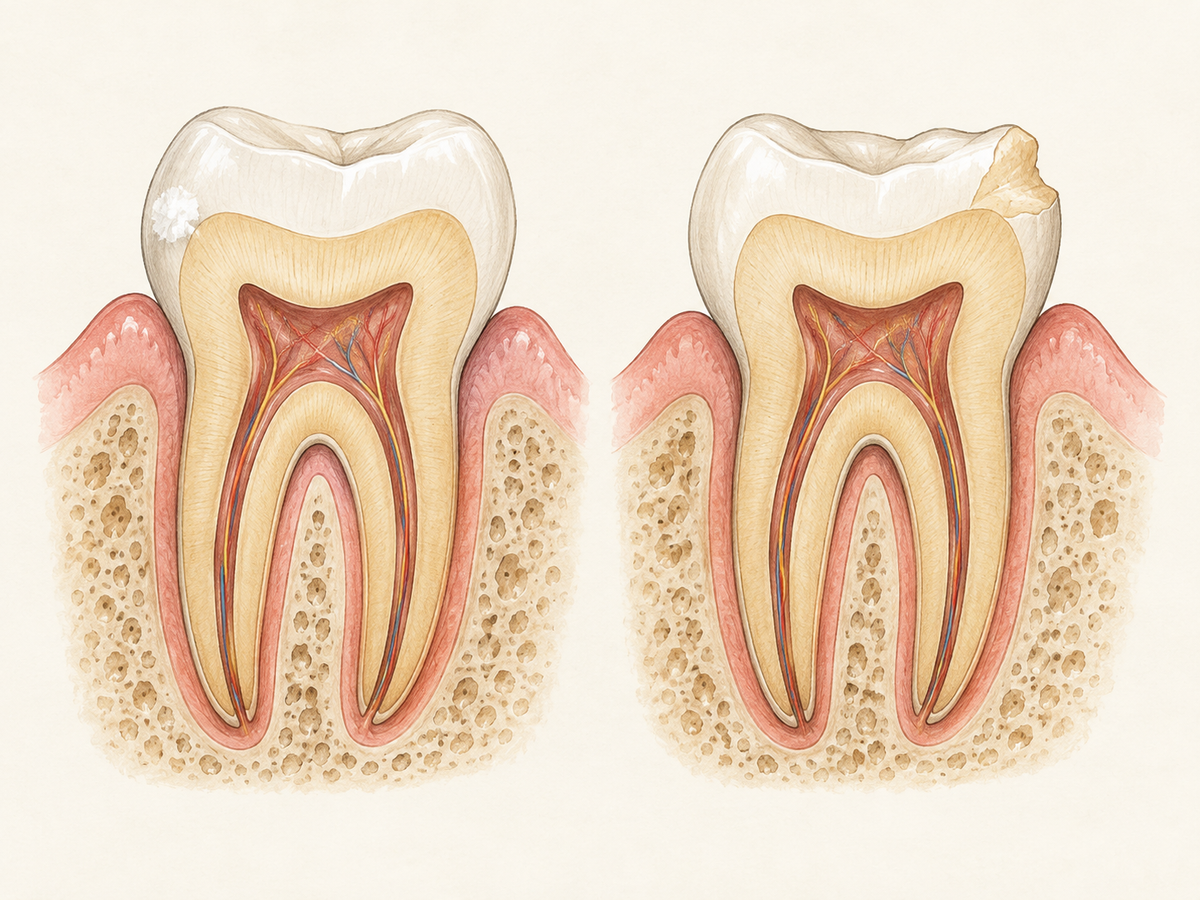
For example, early white spots may be reversible because the surface is still there. But a deep cavity, a chipped edge, or heavy acid wear needs a repair that replaces or covers the missing structure. No routine dental treatment makes natural enamel grow back.
Researchers are studying experimental ways to regrow enamel, but those approaches are still in early research stages and are not standard dental care review of dental erosion management and regeneration. That is why the realistic goal is to protect what remains and repair what has been lost.
Signs Your Enamel Is Damaged
Signs that enamel may be thinning or damaged include:
- Sensitivity to hot, cold, or sweet foods and drinks
- Teeth that look more yellow or dull
- Transparent or see-through edges, especially at the front teeth
- Rounded tips or small dents in the chewing surfaces
- Rough or uneven spots on the tooth surface
- White spots, especially near the gum line or around braces
- Cracks or small chips
- Frequent cavities
White spot lesions are often the earliest visible sign of weakened enamel. At this stage, minerals have left the surface, but the tooth shape is still intact. This is the most reversible stage, and early help may stop the process systematic review of white spot lesions.
Visible dents, chips, or holes mean the structure itself has been lost. Those changes will not reverse with toothpaste. Pain, a sharp edge, or a sudden change in tooth shape should trigger a dental visit rather than a switch to a new product.
At-Home Steps That Can Help
Home care can support weak enamel and protect what remains. These steps are most useful for early weak spots.
- Brush with fluoride toothpaste. Fluoride helps minerals go back into weak enamel and makes the surface more resistant to acid review of enamel remineralization strategies.
- Use products with hydroxyapatite or calcium phosphate. These are minerals that may help replenish early weak spots.
- Limit acidic drinks and foods, especially frequent exposure. Soda, citrus, sports drinks, and wine are common sources.
- Rinse with water after acid exposure. Water helps wash acids away.
- Wait at least 30 minutes before brushing after vomiting, citrus, soda, or wine. Brushing too soon can rub softened enamel away guidance on acid-related enamel wear.
- Use a soft-bristled brush and gentle pressure to avoid extra abrasion on weakened surfaces.
These habits can strengthen early weak spots and protect the remaining enamel. They cannot rebuild enamel that has already been lost.
Dental Treatments That Rebuild or Cover Enamel
Professional treatment depends on how much enamel is affected.
| What you see | What your dentist may suggest | What it does |
|---|---|---|
| Early white spots or softened enamel | Fluoride varnish or sealant | Helps harden weak enamel |
| A small cavity | Filling | Removes decay and seals the hole |
| A small chip or exposed root | Bonding | Covers and protects the area |
| Extensive wear or shape loss | Veneer or crown | Rebuilds or covers the tooth |
Fluoride varnish and sealants are often used for early weakening. Sealants and fluoride treatments can help stop early decay and protect vulnerable surfaces review of nonrestorative treatments. Fillings are used when a cavity has formed, and conservative filling approaches are recommended clinical guideline on restorative treatment.
For larger wear, bonding, veneers, and crowns can restore shape, function, and appearance. Minimally invasive direct and indirect options are commonly used to rebuild worn teeth consensus statement on restoring worn dentitions.
Each treatment restores protection, function, or appearance rather than regrowing enamel. Ask your dentist whether the damage is active weakening, a cavity, or irreversible wear. That answer changes which treatment makes the most sense.
Common Mistakes and When to Get Help
Some habits can make enamel loss worse:
- Brushing too soon after acid exposure
- Overusing abrasive whitening pastes
- Ignoring persistent dry mouth
- Ignoring acid reflux or frequent vomiting
- Ignoring teeth grinding or clenching
- Expecting remineralizing toothpaste to fix deep damage
Dry mouth reduces the saliva that helps protect teeth. Acid reflux can repeatedly expose enamel to stomach acid dental guidance on acid reflux and enamel. Teeth grinding can wear enamel down over time review of demineralization and tooth wear. These conditions need attention, not just a different toothpaste.
See a dentist if you notice any of these warning signs:
- Tooth sensitivity that does not go away
- Pain or throbbing
- A visible hole, chip, or crack
- One tooth becoming darker or discolored
- Teeth that look shorter or yellower than before
- A sharp edge that irritates your tongue or cheek
The next step is simple: protect what remains, treat the cause of the damage, and choose a repair option only after a professional exam.
 Best Overall
 Best Value
 Best for Sensitive Teeth
This article has been reviewed by an oral health professional for accuracy. It is intended to provide general educational information and should not be used as a substitute for personalized medical advice, diagnosis, or treatment. If you have questions or concerns about your oral health, please consult a dentist, physician, or other qualified healthcare provider.