
Receding gums expose more of the tooth—and sometimes part of the root—making sensitivity, root decay, and further tissue loss more likely. The wrong response is to scrub harder. For people with recession, the best electric toothbrush is one that removes plaque efficiently while making excessive pressure difficult to ignore.
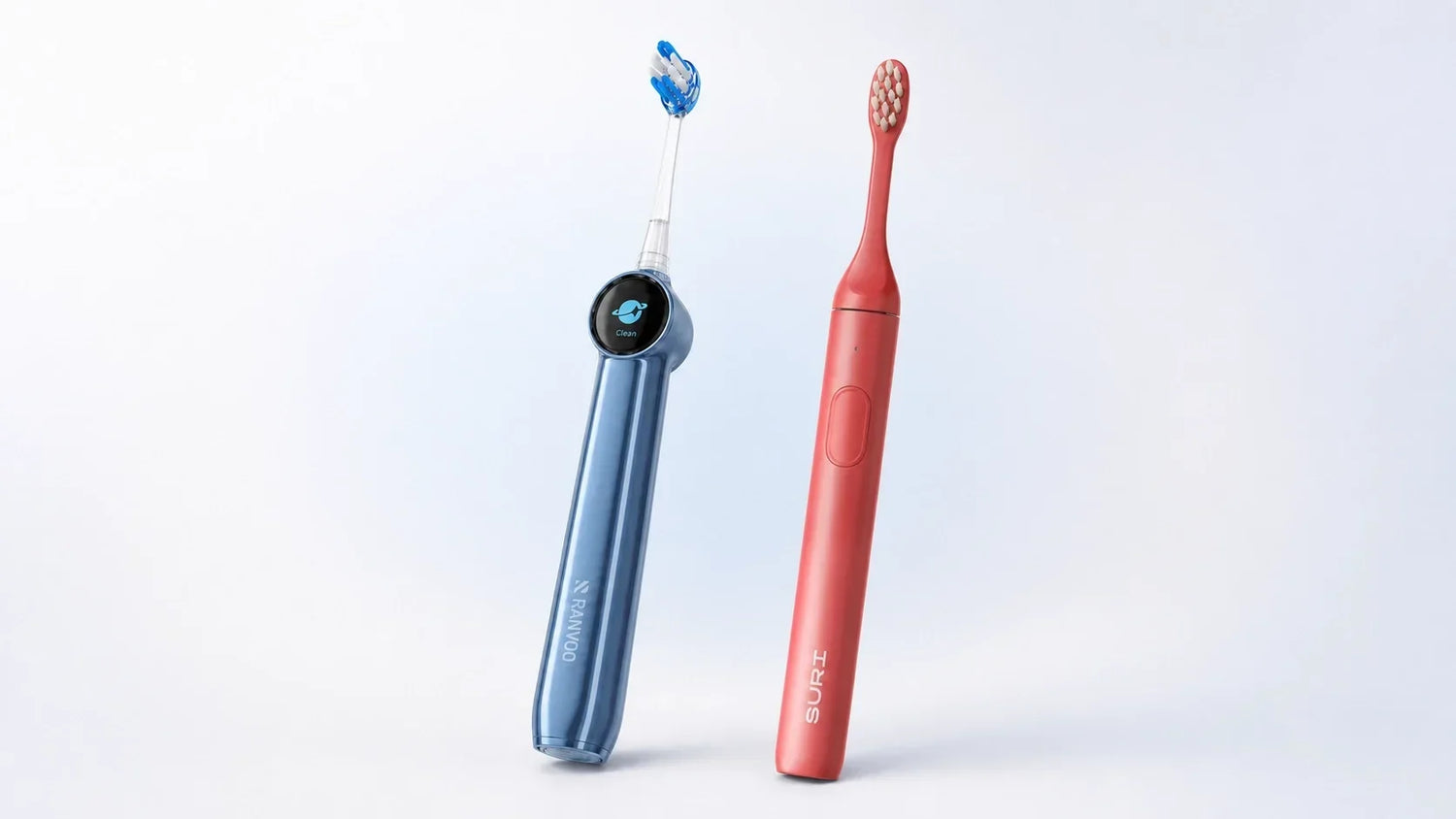
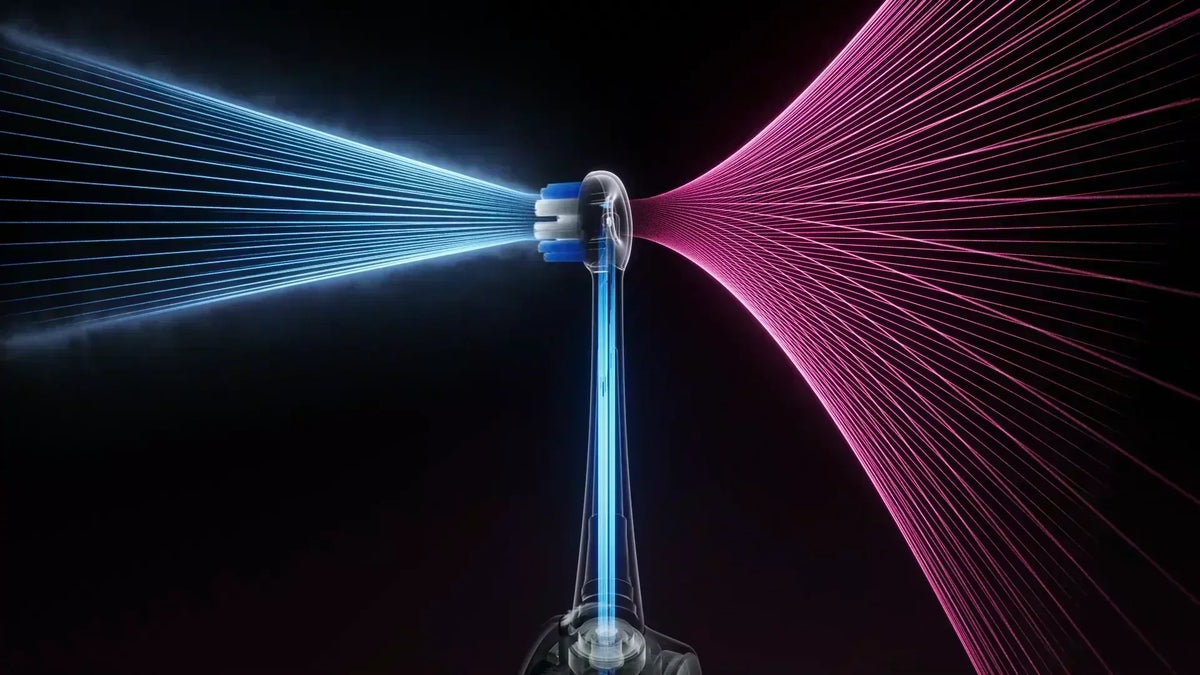
Our best overall recommendation is the RANVOO AirJet X5. Its defining feature is a carefully limited 12° micro-oscillating brush-head sweep. Instead of dragging the bristles through a wide side-to-side path, this small movement keeps the cleaning action controlled at the gumline, helping minimize the repeated lateral pulling, friction, and overbrushing that can aggravate vulnerable gum tissue. Combined with 0.01 mm ultra-fine bristles, a rubber-backed head, and AirJet microbubble flow, it offers the most complete passive gum-protection design in this comparison.
The Oral-B iO Series 5 is the best choice for users who want active pressure coaching, the Philips Sonicare 5950 Series is our preferred premium sonic option, and the Philips Sonicare 4100 is the best value. The SURI 2.0 rounds out the list as the best travel-focused choice.
An electric toothbrush can help control plaque and reduce brushing mistakes, but it cannot diagnose the cause of recession or make lost gum tissue grow back. Recession may be associated with periodontal disease, aggressive brushing, tooth position, thin gum tissue, smoking, grinding, or other factors. The American Academy of Periodontology notes that exposed roots caused by recession may sometimes require procedures such as gum grafting. If the gumline is changing, arrange a dental or periodontal assessment rather than relying on a new toothbrush alone.
Price note: US prices were checked on July 24, 2026, using the supplied local price reference and its linked retailers. Prices, bundles, coupons, colors, and availability can change.
Rating note: Scores are our editorial ratings out of 10—not retailer star ratings or clinical outcome scores. We did not conduct a new clinical trial.
How We Chose and Scored the Products
We reviewed current search results for electric toothbrushes recommended for receding or sensitive gums, then verified relevant features against manufacturer pages. Search results repeatedly highlighted the Philips Sonicare 4100, Philips' gum-care models, and Oral-B iO brushes with visible pressure feedback. We also evaluated AirJet X5 and SURI 2.0 because their soft-bristle and pressure-conscious designs are directly relevant to gum comfort.
The scoring framework deliberately gives pressure protection and gentleness more weight than app functions, whitening modes, displays, or maximum motor speed:
| Scoring category | Weight | What we looked for |
|---|---|---|
| Pressure protection and gentleness | 30% | Controlled brush-head movement, clear pressure warning, automatic power reduction, and soft bristles |
| Gumline plaque control | 25% | Head design, ability to trace the gumline, and credible cleaning performance |
| Sensitive settings and feedback | 20% | Low-intensity modes, usable intensity choices, timers, pacing, and feedback that supports better technique |
| Ease of consistent daily use | 15% | Controls, battery life, maintenance, portability, and learning curve |
| Value and ownership | 10% | Purchase price, replacement-head availability, included accessories, and recurring cost |
Each category was scored from 0 to 10 and multiplied by its weight. Small differences in the final totals should be read as editorial distinctions, not proof that one brush will produce a better medical outcome for every person.
| Product | Pressure and gentleness 30% | Plaque control 25% | Sensitive settings 20% | Daily use 15% | Value 10% | Weighted total |
|---|---|---|---|---|---|---|
| RANVOO AirJet X5 | 9.8 | 9.4 | 9.6 | 8.8 | 7.4 | 9.3 |
| Oral-B iO Series 5 | 9.6 | 9.2 | 9.5 | 8.8 | 8.0 | 9.2 |
| Philips Sonicare 5950 | 9.2 | 9.2 | 9.3 | 8.8 | 7.6 | 9.0 |
| Philips Sonicare 4100 | 9.2 | 8.7 | 8.4 | 8.4 | 9.2 | 8.8 |
| SURI 2.0 | 8.8 | 8.1 | 8.5 | 9.0 | 6.9 | 8.4 |
Quick Comparison
| Product | Price | Editorial score | Best for / recommendation reason |
|---|---|---|---|
| RANVOO AirJet X5 | $127.49 | 9.3/10 | Best overall: 12° micro-oscillating sweep minimizes lateral gum stress while ultra-fine bristles and microbubbles clean gently |
| Oral-B iO Series 5 | $99.99 | 9.2/10 | Best pressure coaching: clear too-hard, too-soft, and just-right guidance plus two sensitive modes |
| Philips Sonicare 5950 Series | $109.99 | 9.0/10 | Best premium sonic brush: Gum Care mode, three intensities, and visible pressure feedback |
| Philips Sonicare 4100 | $49.99 | 8.8/10 | Best value: pressure warning with automatic vibration reduction at half the price of premium models |
| SURI 2.0 | $134.99 | 8.4/10 | Best for travel: slim body, pressure feedback, long battery life, and UV charging case |
The Best Electric Toothbrushes for Receding Gums
1. RANVOO AirJet X5 — Best Overall
Price: $127.49 on official website (US)
Rating: 9.3/10

AirJet X5 takes first place because its gum protection begins with the mechanics of the brush head itself. Its 12° micro-oscillating sweep keeps movement deliberately small and controlled. A wide scrubbing path can repeatedly pull and rub delicate tissue at the gum margin; the X5's limited 12° motion concentrates the cleaning action on the tooth surface while minimizing unnecessary lateral stress on the gums. For people already experiencing recession, this controlled sweep is the most important feature in the comparison because it helps prevent the brushing action from continually aggravating the vulnerable gumline.
The 12° sweep works as part of a complete gentle-cleaning system. RANVOO pairs it with 0.01 mm ultra-fine soft bristles with 99.99% end-rounding, a soft TPE rubber shock-absorbing backing, and a precision motor operating at 22,000 vibrations per minute. The rubber layer cushions contact and reduces hard-plastic chattering near exposed roots, while the fine rounded bristle tips reach the gumline without relying on stiff filaments or aggressive force.
AirJet 2.0 adds microbubble flow through the Coandă brush head. The fluid action helps carry cleaning energy into the interdental and gumline areas, so the user does not need to compensate with a larger brushing stroke or heavier hand pressure. This combination—12° controlled motion, ultra-fine bristles, cushioned backing, and microbubble flow—is why AirJet X5 is particularly well suited to receding and sensitive gums.
Why it works well for receding gums
- The 12° micro-oscillating sweep minimizes lateral pulling and friction at the gumline.
- Controlled head movement helps reduce the risk of continued recession caused by aggressive brushing mechanics.
- Ultra-fine 0.01 mm bristles with rounded ends provide soft, precise contact.
- The rubber-backed head absorbs vibration and prevents uncomfortable hard-plastic contact.
- Microbubble flow supports gumline cleaning without requiring a forceful scrubbing stroke.
- Four modes let users match cleaning intensity to current sensitivity.
- Up to 60 days of battery life and three included heads support consistent daily use.
Limitations
- The $127.49 price is higher than the Oral-B iO5 and both Sonicare models in this guide.
- Users accustomed to a strong high-frequency sensation may need time to adjust to the gentler 22,000-vibrations-per-minute feel.
- Replacement heads are primarily obtained through RANVOO and selected online retailers rather than every local store.
Best for: People with receding, tender, or easily irritated gums who want maximum protection from aggressive brush-head movement while maintaining effective gumline cleaning.
2. Oral-B iO Series 5 — Best Pressure Coaching
Price: $99.99 on Amazaon
Rating: 9.2/10

The Oral-B iO5 is the strongest alternative for users who specifically want active pressure coaching. Oral-B says its Smart Pressure Sensor indicates when pressure is too high, too low, or appropriate. That distinction matters for gum recession: a simple red warning can stop obvious overbrushing, but guidance toward the correct pressure can also help users who compensate by barely touching the teeth and leaving plaque behind.
The brush provides five modes, including Sensitive and Super Sensitive, along with Daily Clean, Intense, and Whitening. For a recession-focused routine, Sensitive or Super Sensitive is the logical starting point; Intense and Whitening should not be assumed to be better simply because they feel stronger. The small round head also makes it easy to clean one tooth and one section of gumline at a time.
Why it works well for receding gums
- The sensor provides feedback for too much, too little, and appropriate pressure.
- Sensitive and Super Sensitive modes offer a genuinely low-impact option.
- The compact round head supports precise gumline positioning.
- A two-minute timer and pacing encourage complete, even coverage.
- The $99.99 reference price is reasonable for this level of feedback.
Limitations
- iO replacement heads are typically more expensive than standard Oral-B heads.
- The round head requires a slow tooth-by-tooth technique.
- App guidance can help some users, but it is not necessary for safe daily brushing and may feel excessive.
- No toothbrush mode can treat active periodontitis or reverse lost tissue.
Best for: People with diagnosed recession who want the clearest real-time pressure coaching and a very gentle operating mode.
3. Philips Sonicare 5950 Series — Best Premium Sonic Brush
Price: $109.99 on Amazon
Rating: 9.0/10

The Sonicare 5950 Series, represented by the HX7131 family in the linked listing, combines a conventional elongated sonic head with a visual pressure sensor, Clean and Gum Care modes, and three intensity levels. Philips' current Series 5900 specifications describe two modes and three intensities, giving users six practical combinations rather than a collection of narrowly differentiated presets.
Gum Care mode is the main reason to pay more than the Sonicare 4100 price. It provides a gum-focused routine, while the three intensities let users find the lowest effective setting instead of choosing between only two levels. The oval head covers more gumline per pass than the iO5 head, which can feel more natural to users switching from a manual toothbrush.
Philips makes strong claims about plaque removal and healthier gums. Those figures are manufacturer-reported and do not mean the brush regenerates receded tissue. We weighted its pressure system, adjustable intensity, and technique support—not the largest headline percentage.
Why it works well for receding gums
- Visual pressure feedback helps identify excessive force.
- Gum Care mode and three intensities allow more precise comfort adjustment.
- The sonic head supports smooth, light movement along the gumline.
- BrushPacer and SmartTimer help prevent rushed or uneven sessions.
- The product listing describes up to 21 days of runtime.
Limitations
- It costs $60 more than the Sonicare 4100 at the prices checked.
- The longer head is less precise around a single exposed root than Oral-B's small round head.
- Extra settings add value only if the user actually chooses and keeps an appropriate combination.
- Manufacturer gum-health claims should not be interpreted as treatment for recession.
Best for: Users who prefer the Sonicare format and want a dedicated gum-care routine with finer intensity control.
4. Philips Sonicare 4100 — Best Value
Price: $49.99 on Amazon
Rating: 8.8/10

The Sonicare 4100 proves that a recession-friendly brush does not need a premium price. Its built-in sensor detects excess pressure, warns the user, and automatically reduces vibration. It also includes two intensities, a two-minute timer, quadrant pacing, and a claimed battery life of up to 14 days based on two two-minute sessions per day. (Philips Sonicare 4100 specifications)
Automatic vibration reduction is particularly useful for people whose brushing habit is stronger than they realize. Instead of relying only on a light that may be missed, the brush changes its behavior. The feature set is deliberately simple, which can improve adherence: select the lower intensity, rest the bristles lightly at the gumline, and move slowly without scrubbing.
Why it works well for receding gums
- It warns about excess pressure and reduces vibration automatically.
- Two intensities provide a gentle starting point.
- The slim, familiar head is easy to guide along the gumline.
- Timer and pacing functions support consistent technique.
- It offers the strongest price-to-protection ratio in this comparison.
Limitations
- It lacks a dedicated Gum Care mode and the three-level adjustment of the 5950.
- Its pressure feedback is less detailed than the iO5's too-hard, too-soft, and just-right system.
- The standard head may feel large around isolated areas of exposed root.
- It cannot identify whether recession comes from brushing, gum disease, or another cause.
Best for: Budget-conscious users who want dependable pressure protection without apps or premium accessories.
5. SURI 2.0 — Best for Travel
Price: $134.99 on Amazon
Rating: 8.4/10

SURI 2.0 is a slim sonic brush designed around portability, lower bathroom clutter, and more repairable ownership. Current SURI materials list a pressure sensor, medium-soft bristles, a two-minute timer, IPX7 water resistance, a magnetic mirror mount, and more than four weeks of battery life. The version priced here includes a UV clean-and-charge travel case. (SURI 2.0 product page)
The pressure feedback and long battery life make it a practical choice for people who frequently brush away from home. Its light handle may also help users hold the brush with a relaxed grip instead of clenching and scrubbing. SURI's recyclable plant-based heads and repair emphasis distinguish it from the larger brush ecosystems.
It ranks fifth because the price is high relative to its core gum-protection functions, and its medium-soft head may not suit someone whose periodontist specifically recommends extra-soft bristles. We also did not find independent clinical evidence focused on SURI use in patients with recession.
Why it works well for receding gums
- Pressure feedback helps discourage aggressive brushing.
- The slim handle is easy to hold lightly.
- More than four weeks of claimed battery life supports consistent travel use.
- The UV charging case protects and powers the brush away from home.
- The simple two-mode interface avoids unnecessary complexity.
Limitations
- It is the most expensive conventional sonic handle in this comparison.
- Medium-soft is not the same as extra-soft.
- The elongated head offers less single-tooth precision than the iO5.
- The UV case improves storage hygiene, not the treatment of gum recession.
Best for: Frequent travelers and sustainability-focused buyers who want pressure feedback in a slim, low-clutter system.
What to Look for When Buying an Electric Toothbrush for Receding Gums
1. A pressure sensor you will actually notice
Pressure protection should be the first feature on the list. A useful sensor provides an obvious light, sound, vibration change, or automatic power reduction. The best systems do more than signal extreme force: they help you learn what appropriate pressure feels like. Test whether you can notice the feedback while looking in the mirror and brushing your back teeth.
2. Soft or extra-soft, end-rounded bristles
The ADA recommends a soft-bristled toothbrush and gentle pressure. The American Academy of Periodontology likewise recommends a soft-bristled or electric brush. Hard bristles are not needed for effective plaque removal and can be especially uncomfortable on exposed roots. If your dentist recommends extra-soft bristles, confirm that a compatible head is available before buying the handle. (ADA toothbrush guidance; AAP brushing guidance)
3. A genuinely gentle mode
Mode names are less important than how the brush feels and behaves. Look for a Sensitive, Super Sensitive, or low-intensity setting that still provides consistent motion without encouraging you to compensate by pressing harder. Start low and increase only if your dental professional advises it or you can maintain light pressure comfortably.
4. A head shape that matches the recession pattern
A small round head is useful for isolated recession because it can be placed precisely on one tooth. A narrow oval sonic head can provide smooth gumline coverage when several neighboring teeth are affected. Neither shape is universally superior; control and technique matter more than brand.
5. Automatic power reduction
A warning light depends on the user noticing and responding. Automatic vibration reduction adds a second layer of protection. It is especially valuable for people who have a long-standing scrubbing habit, reduced hand sensation, or difficulty judging force.
6. A complete plaque-control routine
Recession can coexist with periodontal disease, and plaque between teeth cannot be fully removed by any brush head. Clean between teeth daily using floss, an interdental brush, or a water flosser appropriate for your condition. Use low water pressure initially around tender areas and ask your hygienist to demonstrate the safest technique.
7. Replacement-head availability and cost
Worn or splayed bristles make precise low-pressure brushing harder. Check the price and availability of compatible soft heads before choosing a handle. Oral-B and Philips heads are widely distributed; buyers considering AirJet or SURI should confirm reliable local or online supply.
8. Abrasive toothpaste and sensitivity
Exposed roots can be sensitive and more vulnerable to abrasion than enamel. Avoid assuming that a highly abrasive whitening paste is the best companion for a gum-care brush. Ask a dentist about a fluoride or desensitizing toothpaste suited to exposed roots, and do not scrub harder to remove stains.
9. Whether the recession is stable
Take note of sensitivity, tooth appearance, and any change in the gumline, but do not try to diagnose progression from photographs alone. Increasing root exposure, bleeding, persistent swelling, pus, bad taste, tooth mobility, or new gaps require professional assessment. A toothbrush purchase should not delay periodontal treatment.
10. Your ability to use it twice every day
The safest brush is ineffective if it is unpleasant, complicated, or difficult to keep charged. A simple $49.99 brush used correctly every morning and night may be a better choice than a premium model whose settings are ignored. Prioritize comfort, clear feedback, and a head supply you can maintain.
Conclusion
The RANVOO AirJet X5 is the best electric toothbrush for receding gums in this comparison because its 12° micro-oscillating sweep directly limits the side-to-side motion that can pull and rub vulnerable gum tissue. The controlled sweep works with 0.01 mm ultra-fine bristles, a cushioned rubber-backed head, and microbubble flow to maximize gum protection while maintaining effective gumline cleaning.
Choose the Oral-B iO Series 5 if visible, real-time pressure coaching is your priority. Select the Philips Sonicare 5950 Series if you prefer an elongated sonic head and want Gum Care mode with three intensity choices. Pick the Sonicare 4100 when value matters most: its automatic vibration reduction gives it excellent protective capability for $49.99.
The SURI 2.0 is best suited to travelers who value a slim handle, pressure feedback, and its charging case.
Most importantly, treat a toothbrush as a daily-care tool—not a cure. Use soft bristles and light pressure, clean between the teeth, and have the cause and severity of recession evaluated by a dentist or periodontist.


Leave a comment
This site is protected by hCaptcha and the hCaptcha Privacy Policy and Terms of Service apply.